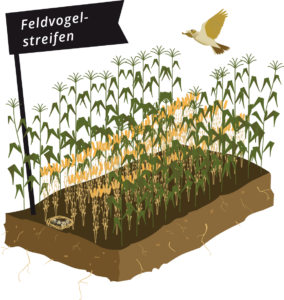
Farmland bird strips

temporary

little effort

Requirements

Strip width and length

at least 12 m wide, maximum permitted width 36 m

Site and soil conditions:

  • dry to normal
  • preferably sunny

Costs:

Yield loss

Machinery requirements:

No additional

Implementation period:

February – July/October

Implementation
step-by-step instruction

1. Site selection

Suitable are

  • maize fields
  • A minimum distance of 100 metres from taller structures, such as trees and buildings, as well as roads and paths

Not suitable are:

  • Locations with larger occurrences of problem weeds such as couch grass or creeping thistle

Size

  • at least 12 m wide, maximum permitted width 36 m

Implementation

  • Early tillage of the maize field by 31 March
  • Sowing of summer cereals at double row spacing from March onwards; sowing of maize on the surrounding field in April–May
  • No use of rodenticides, herbicides or insecticides on the strip; mechanical weed control only following a conservation assessment
  • After 31 July, the strip can be harvested; no whole-plant harvest; leave the stubble fallow over the winter or plough it under from 15 October
  • Rotation from year to year as part of crop rotation
  • For large fields, create several strips


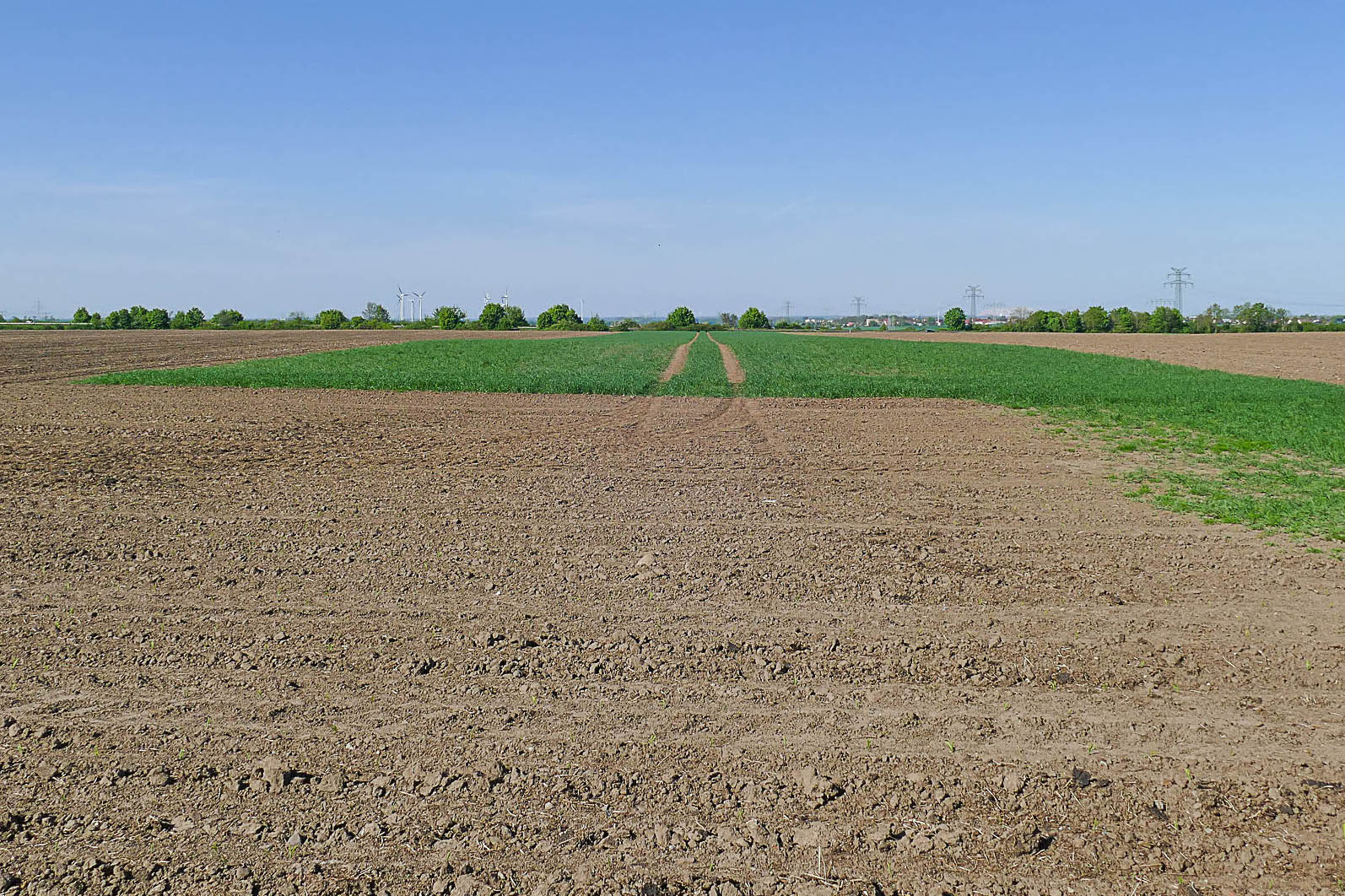
Farmland bird strip in April, Copyright © Foto: K. Schneider
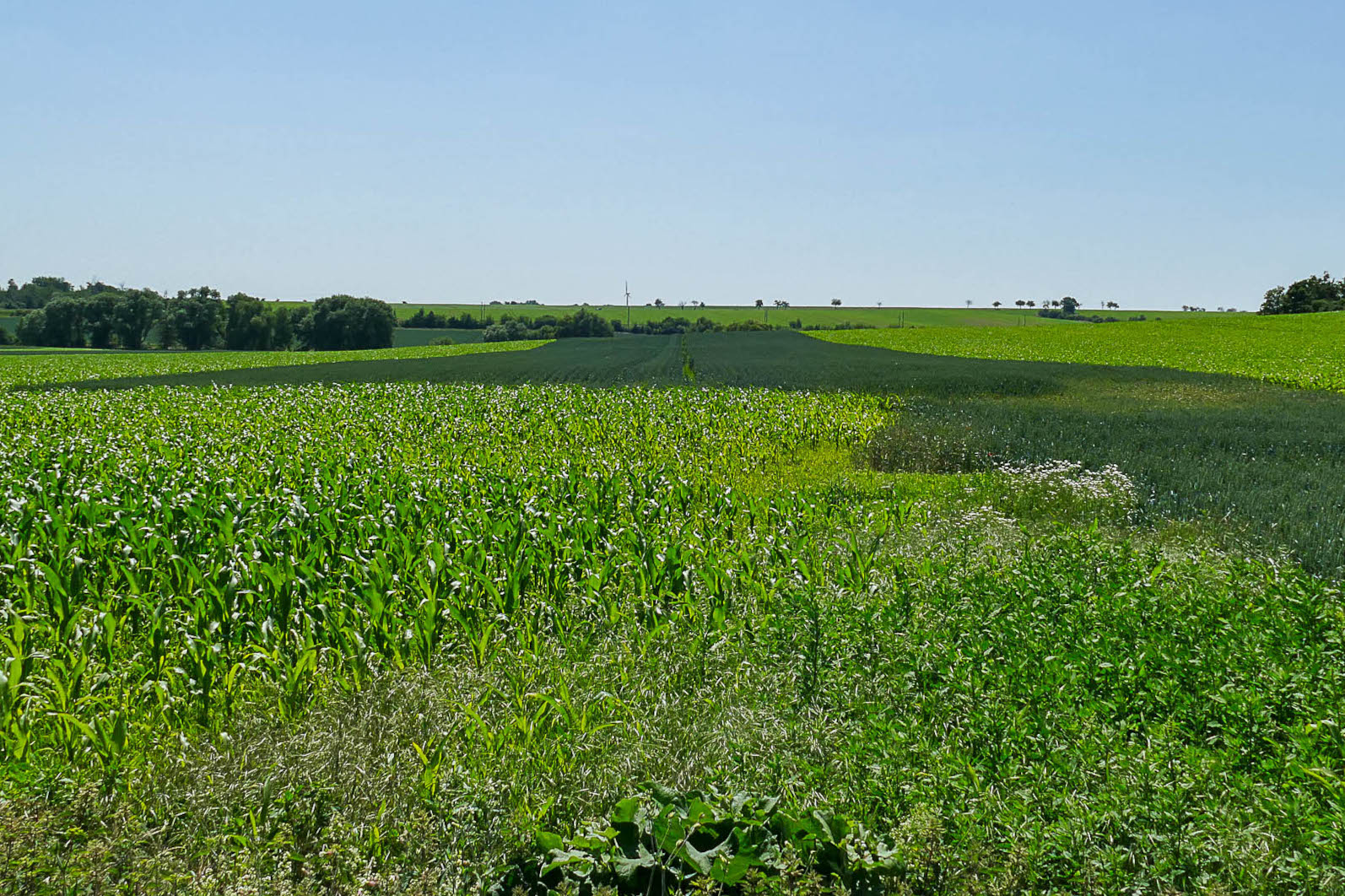
Farmland bird strip in June, Copyright © Foto: K. Schneider
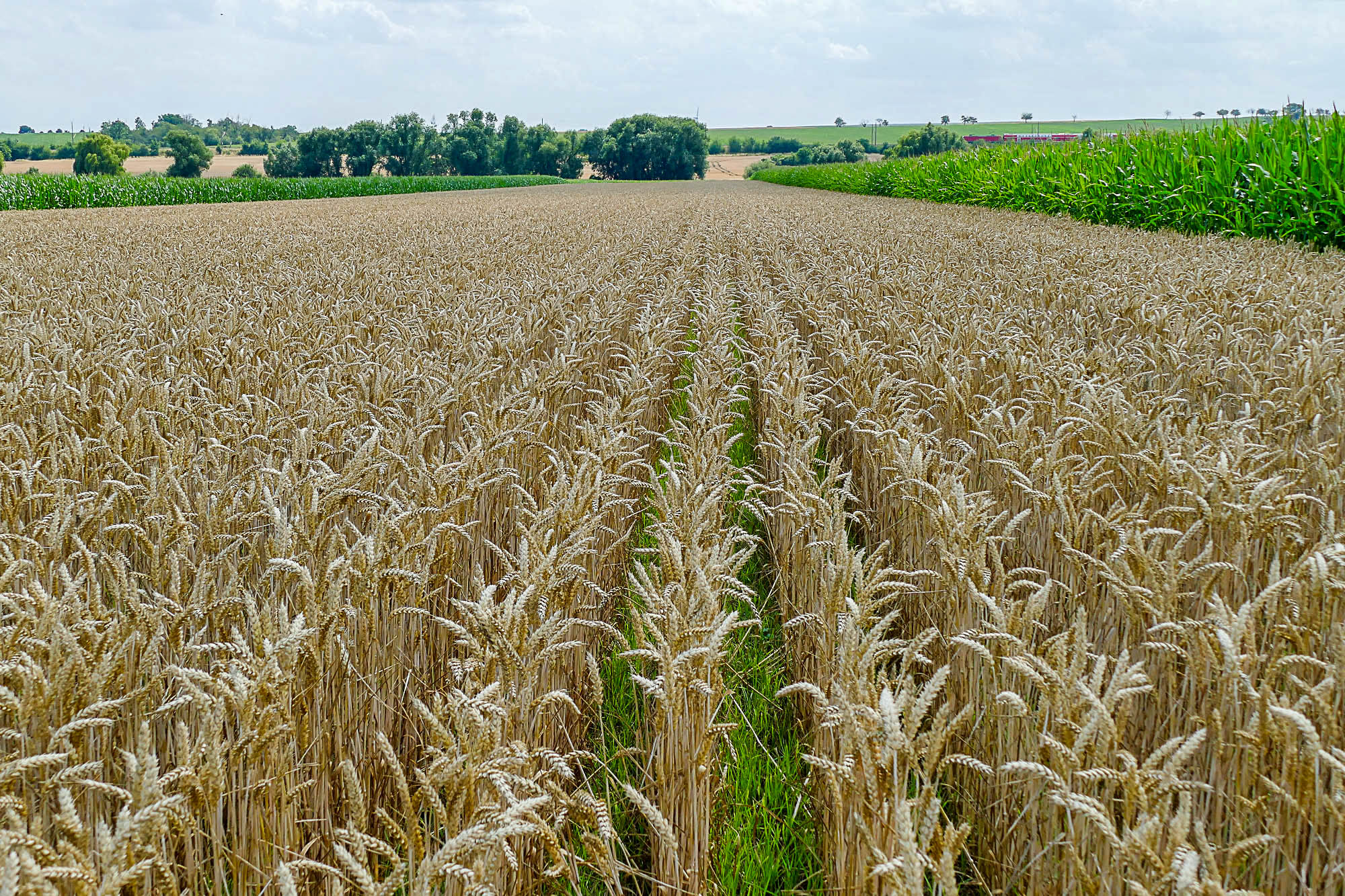
Farmland bird strip with double row spaced wheat rows, Copyright © Foto: K. Schneider
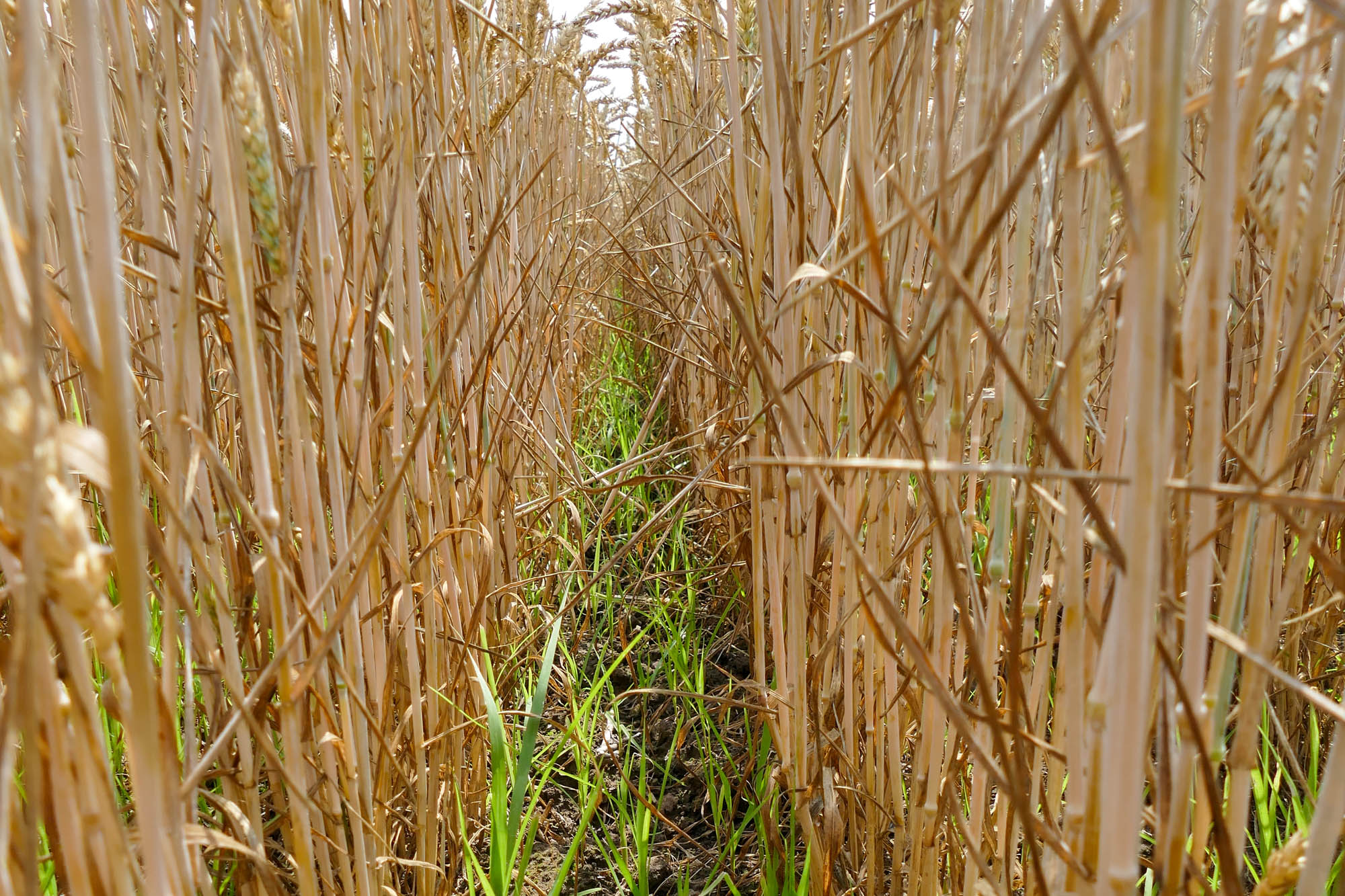
A view between the rows of grain in July, Copyright © Photo: K. Schneider

Rotation mit Erbsenfenstern

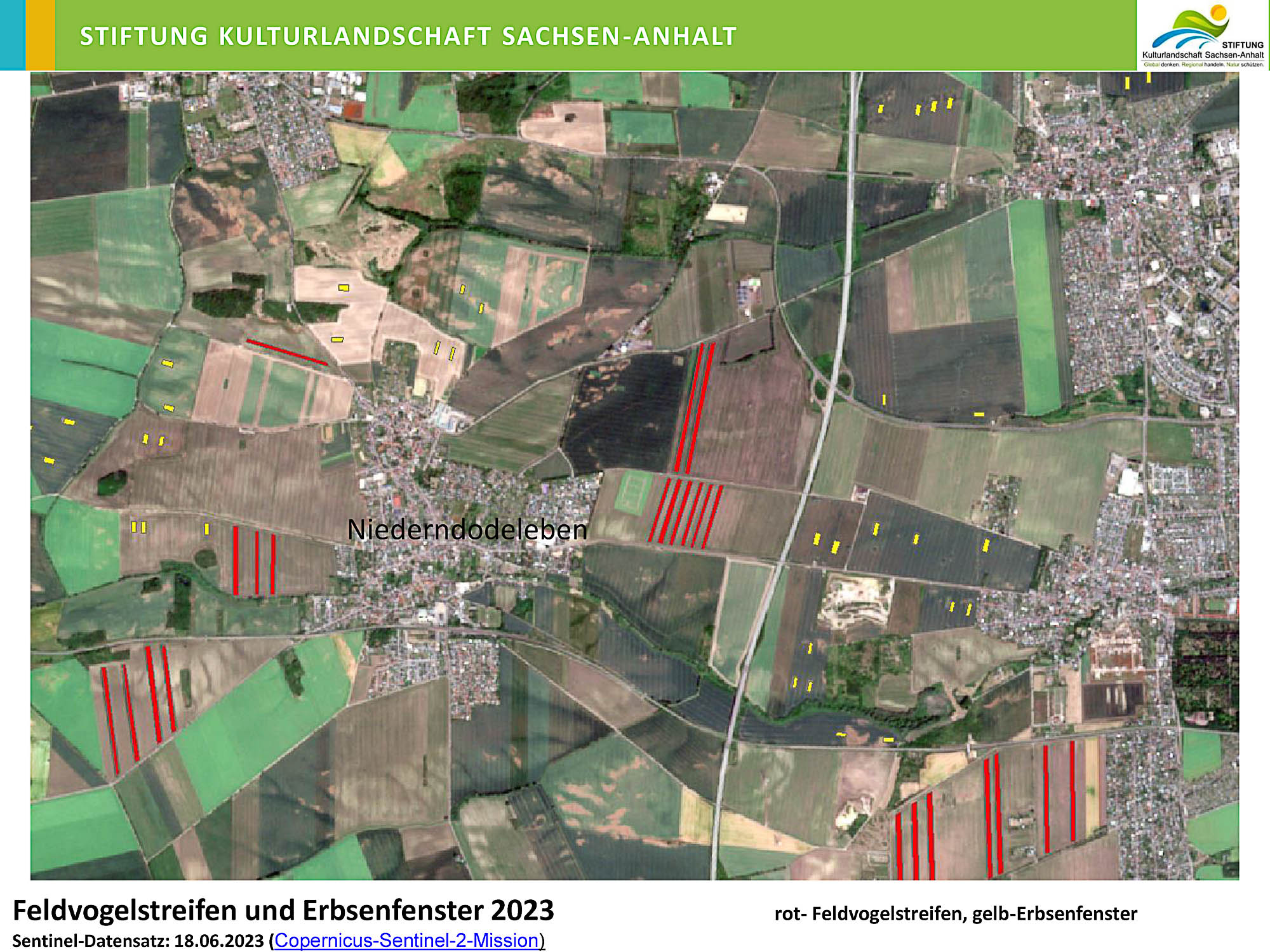
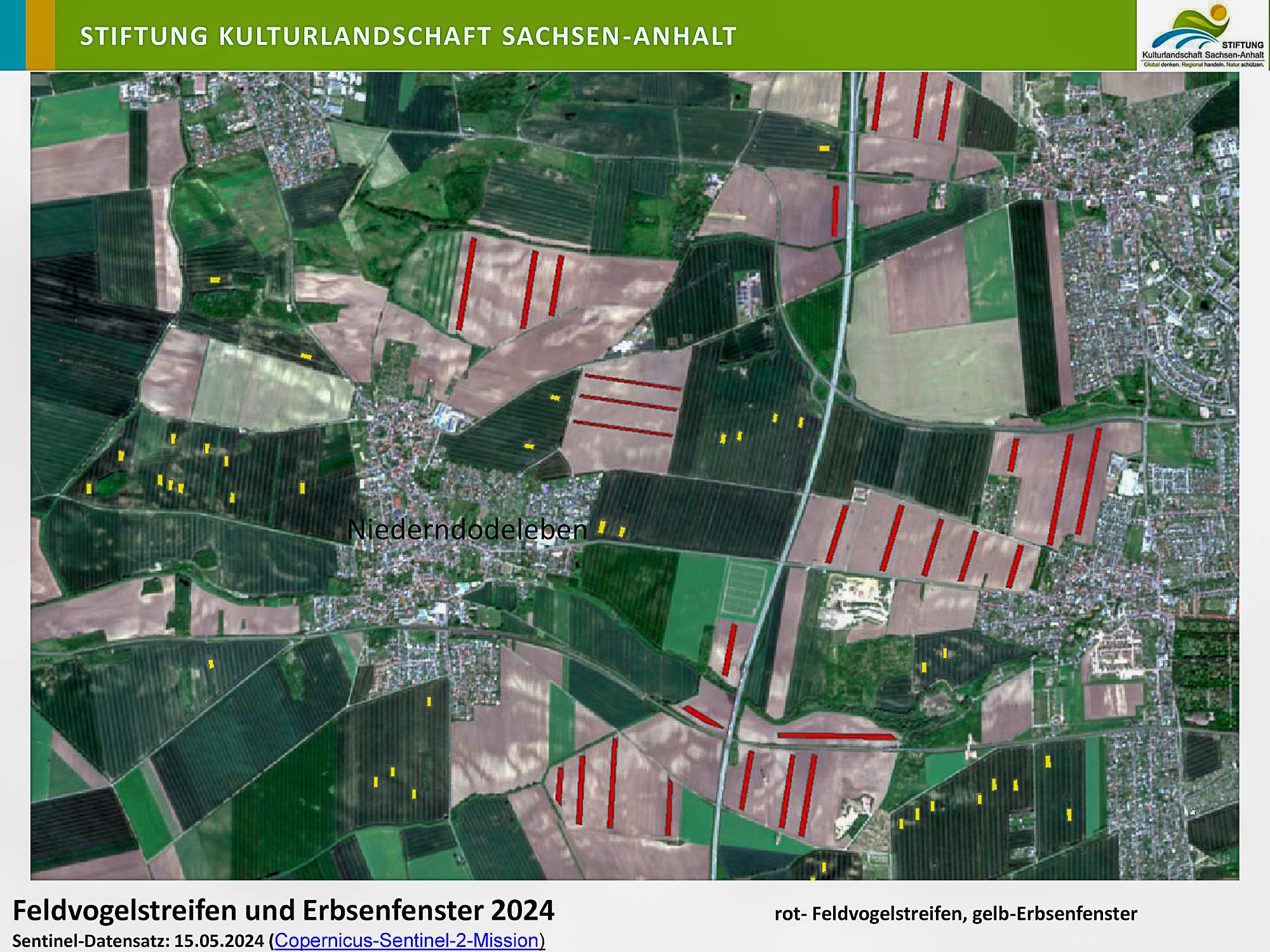
  • Farmland bird strips are established in maize fields for a period of one year at a time. As the maize is grown in a different field on the farm each year, the location of the farmland bird strips also changes annually. To ensure that farmland birds still have a continuous supply of food and breeding sites, pea patches can be established on this plot the following year.
Pea patches and farmland bird strips in the area around Niederndodeleben in 2023, Copyright © Foto: Stiftung Kulturlandschaft Sachsen-Anhalt
Pea patches and farmland bird strips in the area around Niederndodeleben in 2024, Copyright © Foto: Stiftung Kulturlandschaft Sachsen-Anhalt

Ecological impact

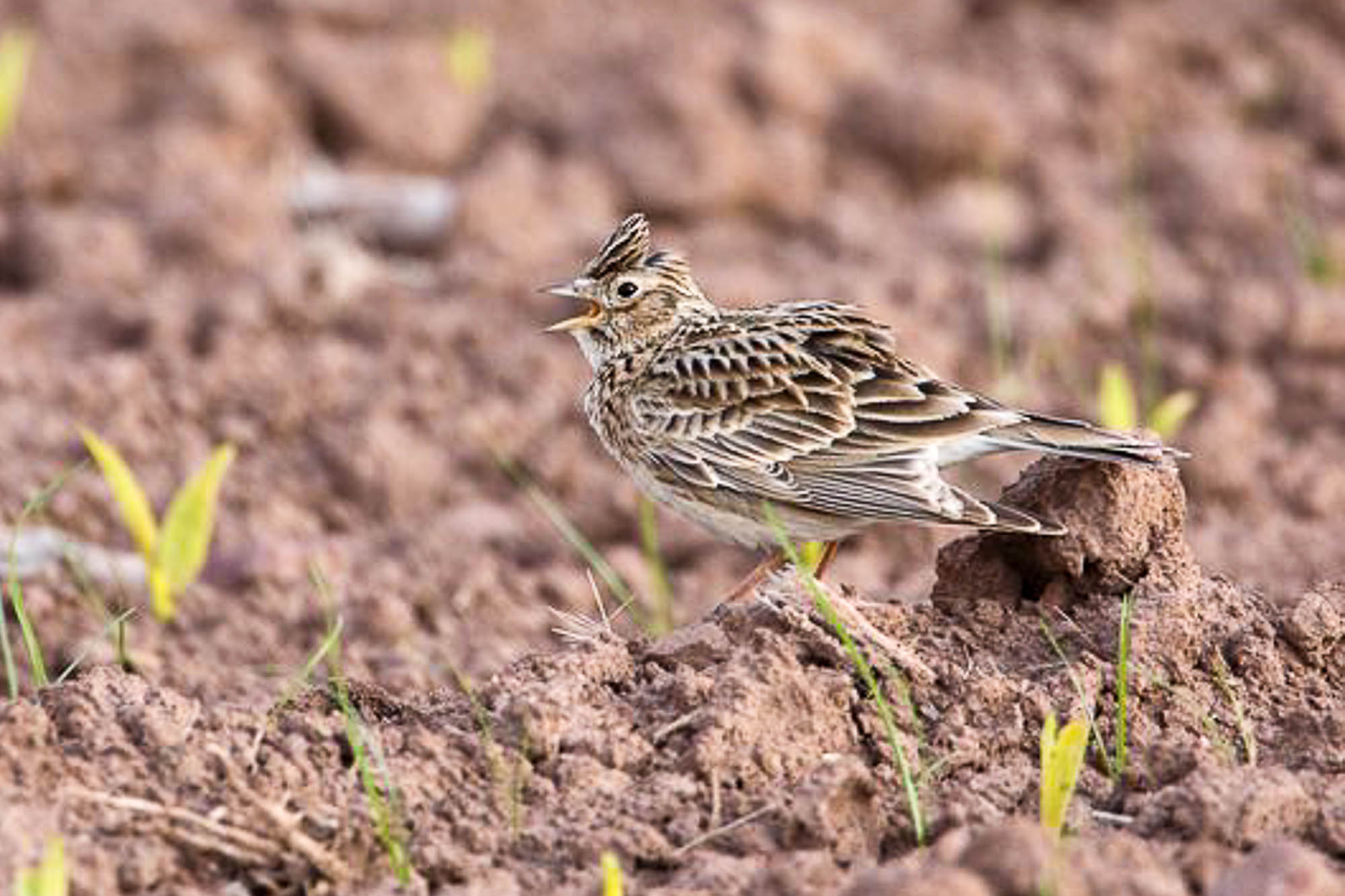
Farmland bird strips are specifically tailored to the needs of the skylark. Skylarks breed on the ground and, to do so, require open meadows, fields or fallow land with an abundance of insects and an unobstructed view to spot predators. Where these conditions are met, they breed from April to August, producing two to three consecutive broods. Since 1970, skylark populations in Germany have declined by up to 90 per cent. This is due to the disappearance of meadows and fallow land, and to the fact that the fields are mainly planted with crops (maize, rapeseed, winter cereals) which, in summer, grow too tall and too densely for skylarks to breed. Consequently, in many regions, the skylark can now only breed once in the spring, when arable crops are still low and sparse. However, this is not sufficient to maintain a stable skylark population. In field bird strips, skylarks find suitable breeding habitats well into the summer.

„The importance of structural diversity on agricultural land is also evident from the extensive use of farmland bird strips by skylarks. Compared with maize, and also with maize-runner bean mixtures, almost five times as many skylarks were observed on the farmland bird strips.“  (F.R.A.N.Z Zwischenbilanz 2023)

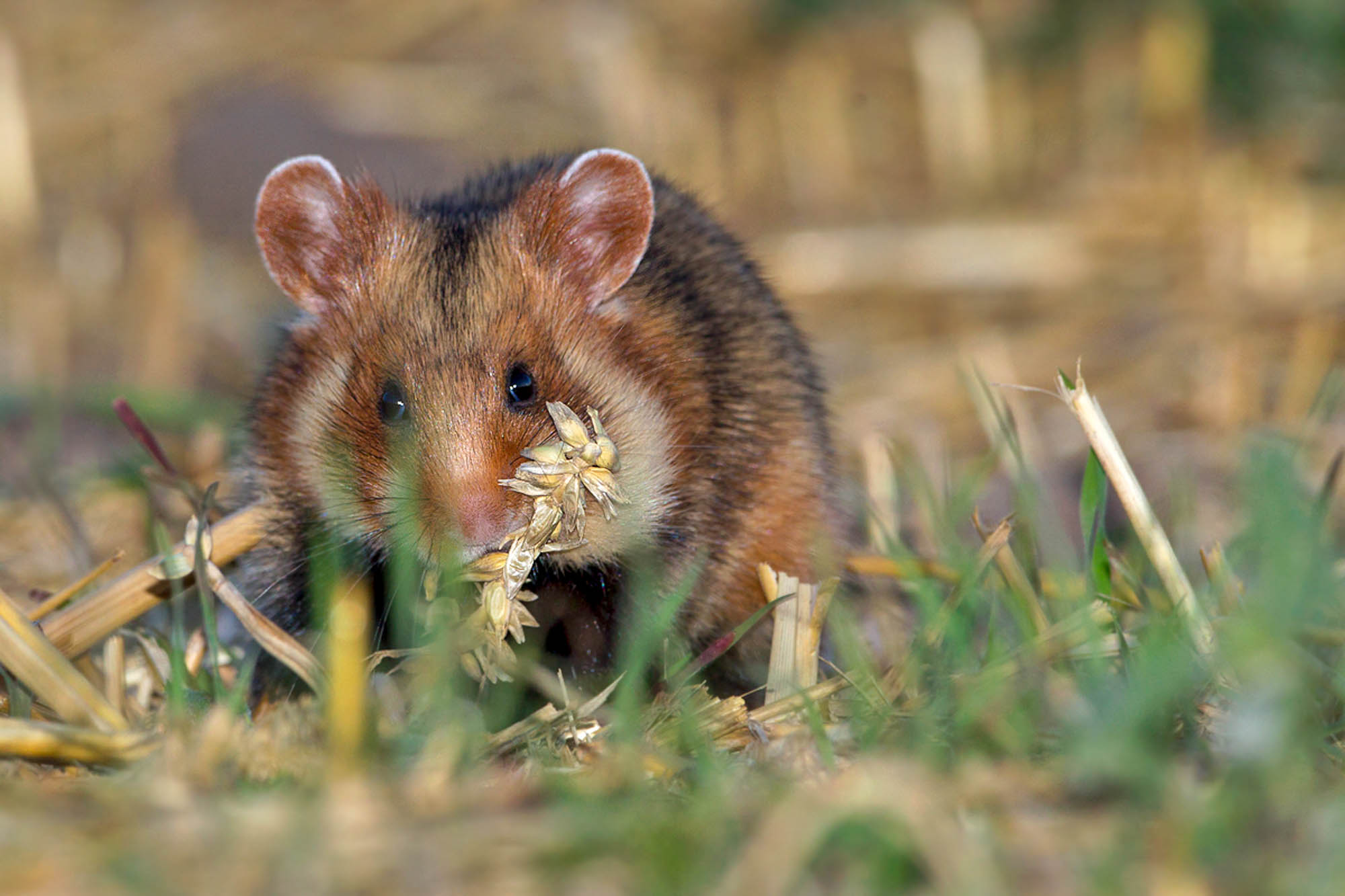
However, farmlandd bird strips also provide suitable breeding and foraging opportunities for other animals found in the countryside, such as the western yellow wagtail, the corn bunting, the European hamster and the brown hare. They are beneficial to the European hamster, as they enable it to survive years when the crop is unsuitable for this species, or to use them as guide and connecting routes to more suitable fields. Furthermore, stubble is not ploughed until 15 October at the earliest, which enhances the attractiveness of these strips as foraging habitats for the European hamster. The farmland bird strips can also contribute to habitat connectivity and support the colonisation of further arable land, as they provide good cover for the European hamster for a long time due to the late stubble ploughing.

Skylark on a maize field, Copyright © Foto: Hans-Jörg Hellwig commons.wikimedia.org
European hamster, Copyright © Foto: Erich Greiner

Additional information (Mostly in German)

Der Feldvogelstreifen ist eine Maßnahme, die im F.R.A.N.Z-Projekt (2016-2026) entwickelt wurde. Sie ist bisher nicht in Förderprogrammen verankert. In Sachsen-Anhalt wird sie aber von der Stiftung Kulturlandschaft Sachsen-Anhalt erfolgreich als Ausgleichs- und Ersatzmaßnahme zur Förderung von Feldvögeln eingesetzt. 

English (UK)